
How It Works
A clear process from the first conversation through medical evaluation and next steps.
LEARN MORE →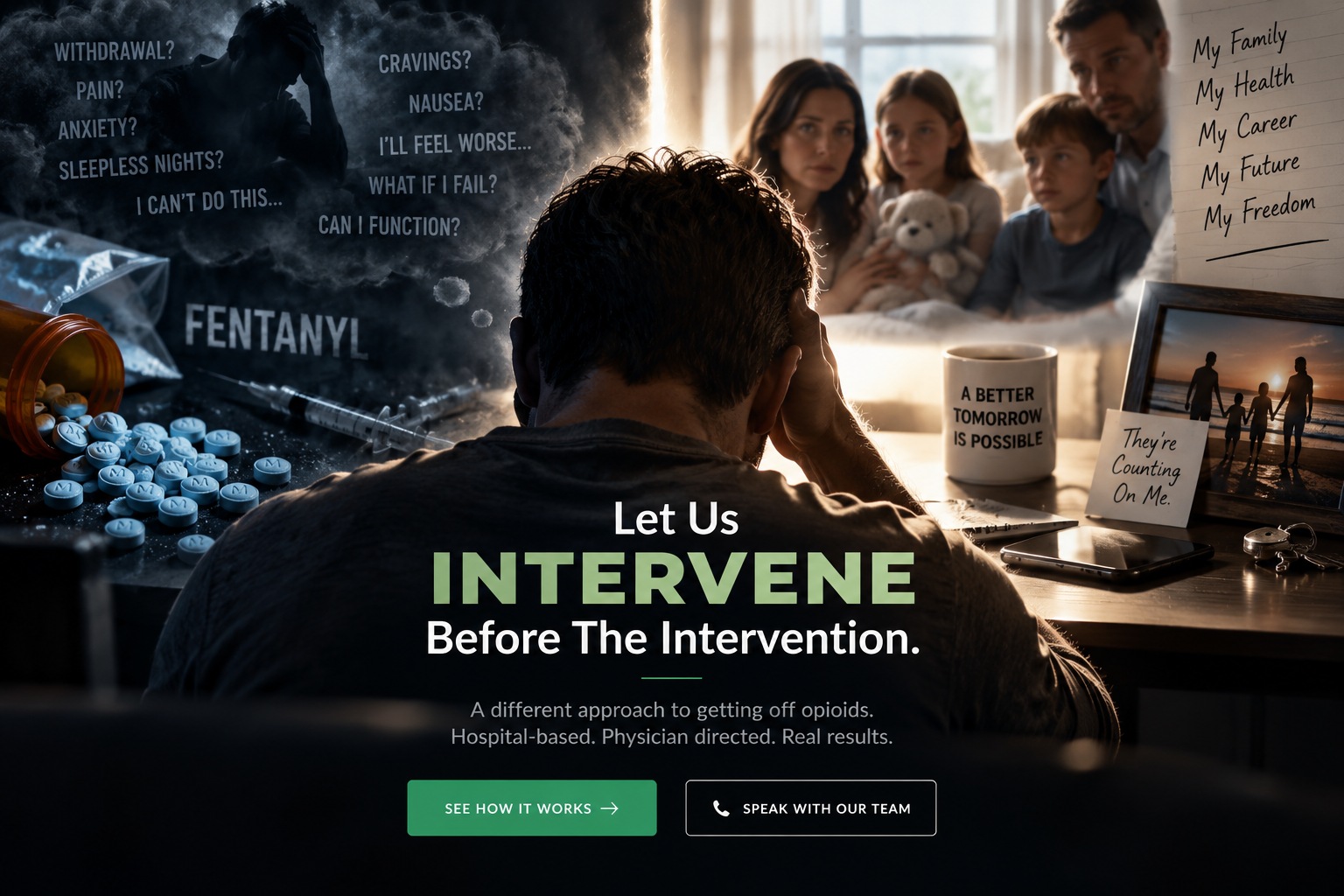
More of your day belonging to you. More attention for your family, health, work and future. Getting off opioids can be difficult—but you do not have to understand every next step by yourself.
The goal is not simply getting through a difficult few days. It is creating room for the parts of life that opioids may have started to crowd out.
Less of the day centered on doses, refills, supply or worrying about what happens if you run out.
More opportunity to be present for the people and moments that matter to you.
A chance to work with clinicians on a plan built around your medical needs and longer-term wellbeing.
Planning treatment around real responsibilities—and looking ahead to days that are not organized around opioids.
Travel. Goals. Relationships. Ordinary days. The question becomes what you want life to contain next.
Opioids act on receptors in the brain and nervous system, including mu-opioid receptors. With repeated exposure, the body adapts. When opioids are reduced or stopped, those adaptations are part of why withdrawal can occur. A medically informed plan can help address that transition and the symptoms that may come with it.
The receptor imagery is a brand metaphor, not a literal depiction of a specific treatment mechanism.
Maybe it is energy for your family. The ability to travel without worrying about medication. A clearer plan for work. Or simply the feeling that your next dose is no longer setting the schedule. Those are reasons to start asking what life off opiates could look like for you.
EXPLORE THE NEXT STEP →A clear process from the first conversation through medical evaluation and next steps.
LEARN MORE →
Why withdrawal happens, what symptoms can occur, and why medical guidance matters.
LEARN MORE →
Useful ways to support someone without turning every conversation into a confrontation.
LEARN MORE →